Positive Energy:
Dogs feel your energy, no matter if you are scared, frustrated, happy, or calm. They will pick up on it and match it too. If you stay calm and stern with your dog, he will respect you. Stern does not mean aggressive or angry, it means assertive while staying in control. This is the energy your dog needs to feel safe.
Challenge your Dog mentally:
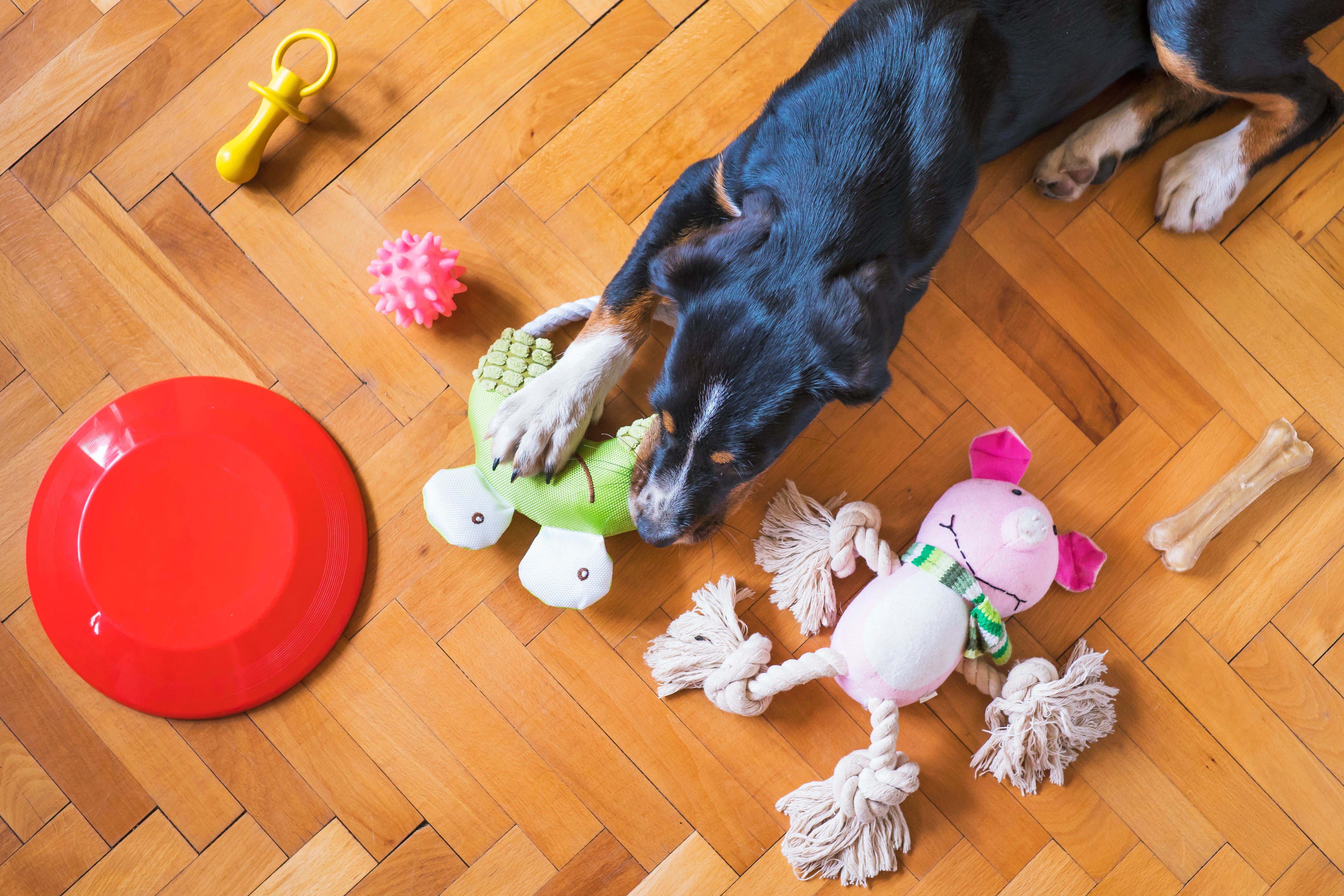
We all need a purpose in life and so do our dogs before they get bored. Play ball or catch with him, go to obedience training, the dog park, throw the frisby, practice basic commands with lots of rewards. There is no limit to the fun!
Work:
Most dogs were bred to fullfill a job such as retrieving, hunting, or herding. For such breeds a daily walk might not be enough and they need extra challenges.
Walks:
The most important thing to have a balanced dog is the daily walk. A big backyard is not a substitute! Your nice landscaped garden or even a few acres are just a large cage to your dog. Please do not deny him his most primal instinct..to walk and work for food. This is his purpose.
read users comments (0)
Yes, the first impression is important to dogs too. Here is what to do to make that first impression a positive experience and therefore the start to a healthy relationship:
As the weather heats and the sun hours become longer, you need to keep a closer eye on your dog. It’s not unusual for dogs to pant when they get overheated, but it’s one of the signs that your dog could have heatstroke so when the summer’s underway. If the panting is combined with exhaustion or a change in how your dog moves, then it’s wise to check him out at your local veterinary clinic. Once your dog has heatstroke he won’t find it easy to swallow so try to lower his temperature using water or a damp towel/blanket until you arrive at the clinic.
Prevent heatstroke by taking some of the following measures:
Water – provide two separate dishes of fresh water for your dog if he’s going to be left alone. Spills happen and if he upsets one dish of water, he’ll still have the other to drink from.
Exercise – take walks when the sun isn’t at its hottest. Also don’t expect your four legged friend to want to chase a stick or fetch a ball in the summer heat, don’t push it. Some dogs however don’t seem to mind the sun and would run as usual if you allowed them to, this is where you have to use common sense and make sure that they don’t exert too much additional energy and become overheated due to activity. An alternative way of getting your dog exercise is to provide a small child’s paddling pool and allow him to bounce around having fun in the water.
Grooming – your dog’s fur may look hot to you, and as a result many dogs find themselves at the grooming parlour having the excess fur removed – take advice from your veterinary or grooming expert before you do this. Fur doesn’t just keep the dog warm, it also acts as a barrier against the sun. Reduce some of the fur, but make sure that you leave enough for him to keep his body cool.
Travelling – if you’re in the car make sure your dog has ample air from an open window or air conditioner. If you park the car, never leave him alone inside. You should carry water for him if you are travelling any distance and stop regularly so he can take a drink and also relieve himself.
The summer can be a fun time for dogs to spend time on a beach or in a forest, but make sure that you are constantly on your guard for signs that he’s overheating and take steps immediately to prevent this turning into heatstroke.
Your Dog's Coat
Brushing your dog every day is something you both should enjoy. It helps to remove loose hair shakes off dander. Always brush in the same direction as the fur grows.
Bathing Your Dog
Never bathe a dog with a shampoo meant for humans or any other animal! Put your dog in the tub and use a cup or shower head to wet him down. Do not use cold or hot water! Apply a little bit of shampoo and watch out that it does not run into the dog’s eyes. Rinse thoroughly.
Use a towel to dry your dog afterwards and brush his fur when he is dry.
Clipping Your Dog's Nails
Do not use scissors; only nail clippers made for dogs.
Clip only the very tip of each nail at first. Try to make out how far the vein runs within the nail. If the vein is difficult to see, just trim a little bit at a time. Should you accidentally do draw blood; apply pressure with a clean gauze pad until bleeding stops.
Let’s clear up some myths about spaying and neutering your dog, before you make a final decision.
Fact: Sterilizing your dog makes him or her better behaved and much healthier pet, which will save you money in the long run.
Myth: Many dog owners, the majority of them males, have a tough time getting their dogs sterilized, because they imagine what it would do to them and reflect that on the dog.
Fact: Your dog will not feel as if he was less of a “man” or “woman” after being sterilized. He or she will not suffer an identity crisis or grief the loss of their reproductive capability. Your dog will simply have one less need to take care of. Instead of being lived by his hormones and the constant thought and urge to breed, he will be able to concentrate on you, the owner, and be more receptive to what you want from him.
Fact: Un-neutered males not able to mate experience a high level of frustration which could lead to aggression. Un-spayed female dogs attract unwanted attention twice a year.
Myth:Spaying and neutering cause weight gain.
Fact: Dogs do not get fat by just being sterilized. Like people, pets gain weight when they eat too much and exercise too little. Most dog owners however continue feeding a high energy diet to a dog that now has less need for energy after he grew up to be an adult.
Fact: Dogs do not grief about their lost capability to reproduce. They reproduce only to ensure the survival of their species. They don’t plan to raise a puppy for eighteen years and they certainly do not dream of their puppy’s wedding.
The mother dogs nurse for a few weeks, teach their puppies about rules and boundaries, and limitations, then send them off to find their place in the pack. The Daddy dogs are not like our human fathers; they don’t even recognize their puppies as their own.
Fact: Neutered and spayed dogs are easier to balance pets. Be a part of the solution. Spay or neuter your pet today!
Dog Breeds in Groups
In this article you will find the majority of dog breeds that are recognized around the world. The dog breeds are categorized by groups:
The Working Group Breed
Akita, Alaskan Malamute, Bernese Mountain Dog, Boxer, Bullmastiff, Doberman Pinscher, Field Spaniel, Finnish Spitz, Flat-Coated Retriever, Fox Terrier, French Bulldog, German Shepherd, Giant Schnauzer, Great Dane, Great Pyrenees, Greater Swiss Mountain Dog, Komondor, Kuvasz, Mastiff, Neapolitan Mastiff, Newfoundland, Portuguese Water Dog, Rottweiler, Saint Bernard, Siberian Husky, Standard Schnauzer, Tibetan Mastiff.
The Toy Group Breed
Affenpinscher, Brussels Griffon, Cavalier King Charles Spaniel,
The Terrier Group Breed
Airedale Terrier, American Staffordshire Terrier, Australian Terrier, Bedlington Terrier, Border Terrier, Bull Terrier, Cairn Terrier, Dandie Dinmont Terrier, Fox Terrier, Irish Terrier, Jack Russell Terrier, Kerry Blue Terrier, Lakeland Terrier, Manchester Terrier, Miniature Bull Terrier, Miniature Schnauzer, Norfolk Terrier, Scottish Terrier, Sealyham Terrier, Skye Terrier, Soft-Coated Wheaten Terrier, Welsh Terrier, West Highland White Terrier.
The Sporting Group Breeds
American Water Spaniel, Brittany, Chesapeake Bay Retriever, Clumber Spaniel, Cocker Spaniel, Curly-Coated Retriever, English Cocker Spaniel, English Setter, English Springer Spaniel, English Toy Spaniel, Field Spaniel, Flat-Coated Retriever, German Shorthaired Pointer, German Wirehaired Pointer, Golden Retriever, Gordon Setter, Irish Setter, Irish Water Spaniel, Labrador Retriever, Pointer, Spinone Italiano, Sussex Spaniel, Vizsla, Weimaraner, Welsh Springer Spaniel, Wirehaired Pointing Griffon.
The Non-Sporting Group Breeds
American Eskimo Dog, Bichon Frise, Border Terrier, Boston Terrier, Bulldog, Chinese Shar-Pei, Chow Chow, Dalmatian, Finnish Spitz, French Bulldog, Keeshond, Lhasa Apso, Poodle, Schipperke, Shiba Inu, Tibetan Spaniel, Tibetan Terrier.
The Hound Group Breeds
Afghan Hound, American Foxhound, Basenji, Basset Hound, Beagle, Black-and-Tan Coonhound, Bloodhound, Borzoi, Dachshund, English Foxhound, Greyhound, Harrier, Ibizan Hound, Irish Wolfhound, Italian Greyhound, Norwegian Elkhound, Otter Hound, Petit Basset Griffon Vendeen, Pharaoh Hound, Rhodesian Ridgeback, Saluki, Scottish Deerhound, Whippet.
The Herding Group Breeds
Australian Cattle Dog, Australian Shepherd, Bearded Collie, Belgian Sheepdog, Border Collie, Bouvier des Flandres, Briard, Canaan Dog, Cardigan Welsh Corgi, Collie, Dachshund, Dalmatian, Dandie Dinmont Terrier, Doberman Pinscher, Dogue de Bordeaux, Dogo Argentino, German Shepherd, Old English Sheepdog, Pembroke Welsh Corgi, Polish Owczarek Nizinny, Puli, Shetland Sheepdog.
Adopting a cat can be a minefield or it can be a very rewarding experience for both the cat and the owner. Cats are placed in shelters for a huge amount of reasons. Sometimes the reason is innocuous the owner has died or they are moving and cannot take the cat with them. Other times the cat does not fit in with a life>Before you consider bringing in an animal from a shelter into your home it can be important to ask what sort of evaluation of the animal the shelter is providing. It is helpful if you have an evaluation of the cat’s prior behaviour, as well as a screening for diseases such as feline leukaemia virus. Sometimes the shelter can only offer an assessment of the animal’s behaviour with them because they have no other information.
It can be a very rewarding experience saving a cat from the threat of being put down, but it is not a decision to take lightly. It is important that the cat meet as many family members as possible before the adoption and that you have the opportunity to evaluate the cat’s behaviour away from other animals as well As with them. Also, be aware that the behaviour the animal is exhibiting is not normal they may be missing a home, or be frightened. Not all animals in shelter are placed there because they have behavioural problems.
Certainly if you are buying the animal from a shelter because it is the cheaper option you should also consider that the real cost of keeping any pet is high, it is not just food, but toys, medical care, boarding fees and many other costs. There are so many animals that are without homes it can be an option to be considered if you want a new cat or even kitten.
Vaccinations are a crucial part of pet care, for two reasons they protect the dog from disease like distemper, and they protect humans and the dogs from diseases such as rabies that can be passed from dog to human.
However vaccinations are not necessarily as routine as they once were
Recent studies have begun to show that when a dog has been vaccinated they have protection for longer than was previously thought. In addition, we now understood that the procedure is not as innocuous as it was once thought to be. Immunologist, infectious disease experts have drawn up a new set of guidelines so that veterinarians can review the risk of disease more accurately and then make the vaccination programme more effective.
Nowadays it is recognised that all dogs are different and the decisions have to take into account the age, breed, environment and travel requirements for each individual dog. Fortunately the modern view is coming around to the idea that all vaccinations have an inherent risk and dogs have a right not to be vaccinated against something they are never likely to encounter in their lives.
Accordingly vaccines have been split into the essential and non essential
The core vaccines recommended for all dogs whatever the type age or other factors are adenovirus, distemper, parvovirus and rabies. Despite the risk of a dog having a reaction to these vaccines, the risk of the dog contracting the disease is higher. Kennel cough, leptospirosis and Lyme disease vaccination are regarded as non essential and it is up to the owner to take advice on the risk.
Guidelines recommend that the distemper, adenovirus and parvovirus core vaccines be given once every three years. Rabies vaccinations does depend on local area health requirements and may be anywhere between one a year to once every four years. If you are showing your dog, or it is placed in a kennel environment then it has a real risk of contracting kennel cough, in these cases it is recommended twice a year. If you a dog is less at risk then the vaccine may be given annually.
However because vaccinations may be less rare but it is important not to neglect medical care for dogs taking the dog to a veterinarian for an annual check up is only the same as a once in seven year check up for a human. Titers or effective blood checks to test exactly how much protection your dog has against certain diseases is becoming more common and although they are now still controversial in time they will help to give a fuller picture.
Canine influenza is a new type of flu strain first reported in
They found that many dogs in humane societies, dog shelters and
Veterinary hospitals in that state had serious respiratory failure. They isolated the strain of the disease as coming from equine influenza virus or horse flu. The first thing to clarify is that although the disease is a mutation it has no affect on human (or bird) populations.
Canine influenza is a contagious respiratory disease that requires medical treatment and the symptoms are sneezing, coughing, and fever. Approximately a fifth of all infected dogs have no symptoms at all. The other eighty percent have either a mild or a serious grade of the flu nut its mortality rate is less than eight percent.
Mild cases of canine flu normally means the dog has a low-grade fever and a persistent cough that may last weeks. There is often a nasal discharge. When dog flu is more serious the fever is higher and the symptoms are worse the dog has sever breathing problems as well as other symptoms more commonly associated with pneumonia. As the disease is a new strain, no dogs have had time to develop immunity.
Antibiotics are usually prescribed so that they can deal with any secondary bacterial infections. In general, dogs respond in the same way that human’s do they need plenty of fluids and rest while the disease takes its course. If the case is severe then the dogs may need intravenous fluids to prevent dehydration.
It is still too new disease to be absolutely sure of all the facts but it does appear to be an airborne virus and dogs catch it from the droplets of the coughs and sneezes of other infected dogs. New infections seem to take between three and five days to take a hold. Once dogs have the infection then they are capable of spreading the disease from the point of symptoms for about ten days. However tour dog can catch the disease from an infected surface they never need to actually see another dog with the disease
At present no vaccine is available however you should be alert to the disease and if your dog has to go into kennels choose one that you know.
There are many reasons why dogs cough canine cough or kennel cough, is caused by bacteria, or parainfluenza is a viral infection of the respiratory tract that is normally mild. Dog flu was first found in the greyhound population, but it was not spread by greyhounds it was coincidental that greyhounds were being studied for other purposes when the disease was discovered.


Traveling By Air with Your Dog
In the past when a dog traveled by air it was common to place the dog in the hold as baggage. This was traumatic and dangerous for dogs. There is no protection in the hold against the extremes of temperature and once in the hold they were trapped. Certainly, on long haul flights, they were not fed or watered and the owners were left chewing their nails worrying. Nowadays many airlines allow dogs to travel as carry on luggage , of course this does apply to small and medium dogs, it would be difficult for a mastiff.
They are normally carried in a pet carrier. Dog owners can then be aware if the dog is airsick or has any type of distress whilst flying. Despite the fact that pets are transported by air more often than they were thirty years ago, most airlines do ask for advance notice, as they still tend to restrict the number of animals on any one flight. The policy does alter with different airlines some restrict dogs during peak flights. In some cases when the dog has to be checked into the hold the airline does require advance notice as they have to be aware that the cargo is compatible.
Some things are not safe to be carried at the same times as animals, dry ice is one example it will kill dogs. It is also a good idea to place the dog in a container with hard sides to protect the dog from accidents. Obviously, there should be sufficient room for the dog to sit, stand and lie down with ventilation from at least two sides. The carrier may well slide during a flight and it can get jammed up against something else.
Whilst putting a dog In the hold does not actually require a notice to say “this end up!”, it should be clearly marked that the luggage does contain a live animal and an arrow pointing upwards would be helpful. Baggage is handled by its very definition; is thrown about and abused. Many European carriers will not take an animal that does not have feeding instructions and a copy of the health certificates taped to the side of the carrier. This makes sense as a precaution in case the flight is delayed.
Many vets refuse to sedate animals when traveling and this has a sound scientific base a sedated animal has slower reaction times and they may not be able to maintain their balance when moved. In addition, the altitude means that they increase the likelihood of developing respiratory problems when they have been sedated.
You can make traveling by air safer for a dog if you make certain that someone will collect the dog on time. Statistically airlines report that when their accidents involving animals it is nearly always as a result of an animal traveling on a flight that is not direct. Make sure that a direct flight is used if at all possible.