Pet Gazette

Let the fur fly!
14.04.2008

dog trainingThere are many different methods of training your animal, and a lot of them are very effective in their own way, even if some of them seem to have a totally different approach. The one thing that many of them have in common is the idea of positive reinforcement in order to train your animal to do what you want him to do. Positive reinforcement works, and it works well, but here are my top three mistakes not to make when carrying out whatever method most suits you and your dog.

Be Patient

It is all too easy to get bored, frustrated and annoyed, especially in the early stages. This means that you end up giving up on positively reinforcing the behaviour before it has had time to sink into the animals understanding. This will bring no results what so ever. You must keep a level of consistency. In the same way that if you are on a diet for yourself, dieting for one day doesn’t work. Be patient with your animal. Oh, and no, there is no smart lipo equivalent for dog training.

Treat your dog as a student.

You love your dog, and if you don’t now you probably will once you have trained him. However, for his own sake when training him do not treat him like your partner. When you are in an office, you treat your boss with respect and do what he says. That doesn’t make him any more important in terms of being human, but in that environment he is above you. What happens by the vending machine is another thing entirely. The same is true for your dog.

You do not insult your dog by understanding that you are the boss, and he is the student. In fact, as a student, he wants you to tell him what to do. So do.

Be consistent

This is very simple. Be consistent. If you are going to do daily ½ hour sessions, stick to it. If you get bored after 10 minutes, your animal will never learn anything. Dogs love predictability, so give it to them. In fact, when you are training them that is exactly what you are trying to achieve. A predictable response every time you say the word “sit” – your dog sits. Help you dog achieve that by giving him the consistency he needs.

17.03.2008

At one time a vacation meant that your dog would be left to the goodwill of relatives or neighbours to feed and walk, or a stay at a nearby kenneling facility, but this doesn’t have to be the case nowadays if you are holidaying within the UK.

Although major hotels will probably not allow you to take your dog with you, there are a number of smaller family run establishments that do cater for dog owners who want to take their four legged friend with them.  You’ll probably find that these are more common in rural areas where dogs will have as good a time as their owners discovering the delights of the UK’s forests and parks.  Many bed and breakfast places in these areas will also allow you to bring your dog, but there are some that restrict the number of animals they allow so make sure that you mention your pooch when making the booking.

Despite the popularity of taking dogs everywhere, the number of places allowing pets is still significantly low and so if you are intending that your dog accompanies you on your vacation, then you need to do your research quickly and ensure that you make a reservation in an appropriate pet friendly hotel or bed and breakfast.  When you receive the confirmation of the booking, ensure that your dog is included on it so that if there’s a problem later, you have documented proof of your dog’s reservation alongside your own.  This is particularly important when it comes to larger dogs as they are more conspicuous than small ones which can be “smuggled” in when the reception clerk turns the other cheek if necessary!

Other things to look out for when making a reservation for your dog to stay with you on holiday are any requirements to provide the accommodation owner with proof of vaccinations, proof of any kind of dog insurance, and whether or not they will provide food for your dog or if you should take your own.  If your dog is a little fussy on what it eats then it’s a good idea for you to take his regular brand of food in any case.   You should also take water dish with you, a portable one that folds up would work double as it would also be able to be packed in your day pack if you’re planning a lot of walking on vacation as you’ll be able to fold this up and take it with you each day and use it to share your water with your dog rather than relying on your dog finding water along the way.  Another essential item is a holiday ID tag that has your name, and the address of where you’re staying as well as contact phone numbers. 

If your summer plans involve getting closer to nature, consider taking pooch with you – not only will you escape the worry and expense of leaving him at home, but he’ll have a great time too.    Remember however, you’ll need to book early if you want to avoid all the doggy hotel beds already being filled!


This post was submitted by Alex Sleeth. Alex is the main contributor on Furrey Lens and has published many articles to do with perlane injections clinic.

17.03.2008

Moving House With Your Cat.

 Moving house is always traumatic and can be made worse if you are worried about your cat. Cats are very territorial and don’t take kindly to change. However there are some things you can do to minimise the stress to both yourself and your pet.

Before the move:

If your cat is used to going to a cattery this will probably be the easiest option until after the move is complete. If you can do this, skip straight doen this article to After the move.

If you are taking your cat with you try and empty a room the night before the move, put in a litter tray, your pets toys, bed, scratching post, and feed in this room as well.

Keep this room closed so there is no chance of your cat escaping.

Choose a room in the new house to use as a safe room for your cat when you arrive. 

It's worth checking that things like your pet insurance is up to date, if something is going to happen, it is more likely to happen during a time of change such as this.

Moving day:

Feed you cat as early as possible but keep your safe room closed perhaps put a notice on the door to prevent it being accidentally opened by the removal men.

When it’s time to leave put your cat in a secure carrying case or basket, do not try to use a cardboard box or allow to travel loose in your car. Use bedding that is familiar to you cat; it will help it to settle. Keep your cat in the travelling container until safely in the chosen room at the new house.

At the new house:

As soon as you have put what you need in the chosen safe room, (Try and arrange these things to be the last things on the van so they can be the first things off.) put in your cat, still in the basket, and all his things including litter tray and water and make sure the room is completely secure, then let out your cat and keep it shut in this room until the removal men have gone and you can secure the house.

After the move:

When you let your cat out of the safe room close off most of the other rooms so that you let it explore only one or two rooms at a time. Try and keep your safe room as one where you feed your cat and where it sleeps so that you can use it any time you are not able to keep the rest of the house secure. Keep your cat indoors for at least three weeks! When the time comes to let your cat out for the first time make sure any identification details on a collar are updated with your new address and phone no. If your pet has not been micro-chipped this would be a good time to have it done.

On the day you let your cat out doors leave it till just before it is due to be fed so that it is hungry open the door and allow it to go out in it’s own time leaving the door open so it can come back in when it wants. Go out with it so you can reassure it and try and keep the first trips out short, calling it back for food when you want it to come in.

Gradually increase the time you allow your pet out until you have reached it’s old routine.


This post was submitted by Adrianna Jordan, she is a contributor to Killing Time . Adrianna is fast becoming an online authority on pet insurance.

17.03.2008

One of the hardest things about being a pet owner is knowing when it’s time to say a last goodbye.  If you’re lucky, nature will take its course and you’ll wake up one morning to find that after many happy, healthy years, your four legged friend has passed away in his sleep.  For many dog owners however, this isn’t the way that things will go, and if you have a dog that’s starting to get on in years then it’s something that you need to be thinking about now.

The thing is that most dog owners who have enjoyed their canine friend’s company for a great many years are faced with their dog being affected by health issues that are not only incurable, but they are also having a negative impact on their dog’s quality of life. There is even the odd sad occasion when someone doesn't have pet insurance, and they can no longer afford the medication. If your dog has a health problem that is kept under control with appropriate medication and/or treatment and is otherwise having a great health, then this isn’t going to be a decision you need to consider at this time.  If, on the other hand, your dog develops a health problem that will become increasingly worse, and your dog is feeling pain or discomfort, then at some time soon your veterinary is going to recommend that you make a decision as to whether or not to put your dog to sleep.

At this point you have to consider the quality of life that your dog has left rather than how much of a gap there’s going to be in your life.  It could be that despite the fact your dog is not able to get around very much, he still seems to enjoy himself and if so then you could postpone what the veterinary thinks is inevitable until such time as you believe your dog’s life is little more than an endless round of medication and treatments to keep him on his feet.   Prolonging the pain isn’t going to make the decision any easier, but if delaying it by a couple of days means that you are able to feel as if you’ve had a chance to say “Goodbye” properly, then don’t let your veterinary rush you into making a decision that you’ll later regret – not because it was the wrong decision, but rather that it was done so fast that you don’t feel you had a chance to come to terms with it before it was too late.  Considering what you think of as being a good quality of life when your dog is fit and healthy, alongside what you think to be a bad quality of life, means that if the day comes that he takes sick with a permanent de-habilitating health condition, you are able to assess if you are doing what’s best for your dog, rather than what’s best for your heart.

Another thing you should consider before the time comes is what you want to do with your dog’s remains.  At one time it was common to bury a four legged friend in a blanket in the garden, but for many people, that’s not a viable option.  One thing you can consider is cremating your dog.  Ask at your veterinary practice for information on this – they should have a leaflet or phone number of a local organization who offer this kind of service.  By preparing yourself in this way you’ll be sure that when the day finally comes that you must say a final goodbye to your dog, you’ll know exactly what to do, instead of having to make difficult decisions when your mind is full of tears.


The submitter of this article is Addison Toft, she is a regular contibutor to Webmasters Desk . Addison is fast becoming an online authority on perlane injections clinic. View her blog here.

15.02.2008

It doesn’t matter how doted you are on your cat, there comes a time of day when his litter box needs emptied and you wish that he belonged to someone else! How could something this cute produce something that smells so bad?  Even if you don’t have a problem with it on a daily basis, there are times in everyone’s life – perhaps days when they’re all dressed up for a special event (such as a wedding), and the kitty tray still needs cleaned usually right before you leave the house! 

The quicker you get the mess out of the litter box however, the less time it’s likely to take.  In the case of poop, quickly scooping it out will mean that you don’t have to change the litter because it hasn’t had a chance to be soiled.  Be careful as you scoop though, it's not like your pet insurance will cover the carpet cleaning costs if you fumble.Leaving the litter tray for an extended period of time on the other hand means that you’re likely to have quite a mess on your hands, and it’s going to take some time to clean up.


One of the best kitty litter box products is the litter tray that resembles a plastic pet carrier.  It has a small “doorway” at the front that allows your cat to get in and out, and is higher inside so that he can sit upright when he’s doing whatever needs to be done.  They are long enough to allow kitty to stretch out his paws when covering over his mess, but they don’t take up much more space than a normal litter tray as it’s little more than a normal one with a lid.  The beauty of these litter boxes is that they keep all of the mess out of side, and it also helps to keep the odours out of the room also.

If you really hate cleaning out the litter box however, you could take a look at one of those self-cleaning litter boxes.  Although not usually a traditional rectangular shape, these litter trays will “rake” the litter clean and the waste removed.  If you are often away from home, or taking care of home, family and work then one of these could be just what you need to remove one job off your daily “to do” list!

When cleaning your kitty litter tray be careful not use any products containing chemicals which could be harmful to your cat.  If you keep the litter tray clean, and change the litter daily, a little warm water should be enough to keep it fresh.


The submitter of this article is Emily Drysdale, she is a regular poster to Webmasters Desk and Harrynomics. Emily is slowly becoming an authority on Cosmetic non-surgical treatments london
.

As if it wasn’t bad enough knowing that your beloved cat is sick and needs medication in order to become healthy again, you also find out that the medication is in tablet format and you’re expected to get it into your cat’s system – somehow.  Not the best of days!  However there are a number of strategies that you can use in order to get the needed medication into even the most anti-pill cat.

1.       Crush it!  This is by far the easiest technique to use, and if it works, you’re set!  If it’s a capsule, open the cap and sprinkle it amongst your cat’s food.  If it’s a hard pill, place it on a metal spoon and crush with the underside of another metal spoon.  Mix the powder with your cat’s food.  This works much better with moist cat food, but you could also try giving your cat and putting it in something like a small portion of tinned tuna fish so that the cat is more likely to eat it at one time and not chance letting the food go stale and uneaten.  Using this method it’s important that the meal containing the medication is completely eaten so that you are sure the cat has had the right dosage. 

2.      Use a device such as pet piller. If you anticipate problems getting tablets into your cat, you should ask your veterinary if they can tell you where to obtain one.  This device will hold the pill on plastic rods, and once you get the piller into your cat’s mouth, you press the plunger down to release the pill, and then quickly remove the device.  You’re going to have to make sure you have a firm grip on him before you start otherwise his wriggling is going to make placing the pet piller in his mouth almost impossible.   

3.      Determination and strength!  Use a towel and wrap it gentle around your cat so that his legs are confined and he’s not able to scratch you.  Gentle tilt his head backwards and encourage him to open his mouth.  You can do this by tickling him under the chin, or gently blowing across (not into!) his nose, or even letting him sniff a treat so that he licks his lips.  Be ready for action because once he opens it, he won’t keep his mouth open for long!  As soon as his mouth opens, drop the pill in as far back as you can, then close his mouth and rub his chin gently until he swallows.  Once he swallows, the pill ought to be gone so give him a treat and then put him on the floor before taking the towel off him.  You’ll get a look of distain rather than gratitude for helping him get well, but at least the medication will be in him!

If you find that despite everything you try, your cat still refuses to take his pills, then call your veterinary clinic within 1-2 days and ask if the medication be changed to a different format as you’re finding it impossible to get your cat to digest the pills!


The submitter of this article is Myah Arnall, she's also a author on Rafaelmea vitali . Myah is fast becoming an authority on oak tables.

25.01.2008

It’s not just humans who are getting heavier!  Take a look around at the cared for dogs in your neighbourhood and you’ll find quite a few of them who are carrying more than a few extra pounds.  Although a dog with his ribs on display isn’t attractive, one that’s a little flabby may be destined for more problems than not being able to run a doggy marathon. 

A dog’s health is also negatively affected by excessive weight.   They are prone to many of the same conditions that their owners such as diabetes and heart disease.  Their weight can also affect their skin and even increase their chances of having heat stroke in the summer.  Many dogs develop arthritis as they age, but overweight dogs are at a much greater risk of this because of the added stress they are placing on their skeleton.

So is your dog overweight?  The best way to find out is to have a word with your vet.  If you are really concerned, make a specific appointment to discuss this.  If you think your dog is possibly a few pounds overweight but nothing serious then you could wait until your dog’s next annual booster vaccination and then talk about it with the vet – but in the meantime start to watch what your dog eats and try to switch to a healthier eating plan. 

At the meeting with your vet make sure that you find out not only the kind of nutrition that your dog needs, and the quantities they should have for their size, but also how much exercise they need.  Again, like humans, overweight dogs need to start a new exercise regime gently and gradually build up to what should be perfect for them.  The added exercise for your dog will have the positive bonus of helping you put in some additional workout time too – whether it’s simply walking around the block, or toning up your muscles throwing a ball or Frisbee!

As cute as you think your chubby dog looks, remember that additional weight is a health hazard that could not only create a lot of expense in future veterinary bills because of the potential illnesses the weight can create, but also it could cost your dog a number of years off his life. 

Start the New Year with a determination to create a healthier lifestyle not only for yourself, but also for your dog.


This post was written by Dan Brown. Dan also regularly contributes to the Pathetic Cosmetic gossip and beauty news and has written lots of different articles to do with eyelid surgery clinic.

Helping Stray Cats

Author: admin
25.01.2008

Now that Christmas is over, in a relatively short period you could be seeing a number of stray cats in your area.  If you find that you have some that seem to be hanging out in your back garden there are a number of things that you can do to help them:

1.       Check the cat to see if it’s wearing a collar with ID tag – if it’s a young cat then it is possible that it’s lost and someone is looking for it.

2.       Feed them!  If you can afford to buy a box of dried food, or a can of cat food, plus put out fresh water for the cat(s) then at least you know that they aren’t starving.

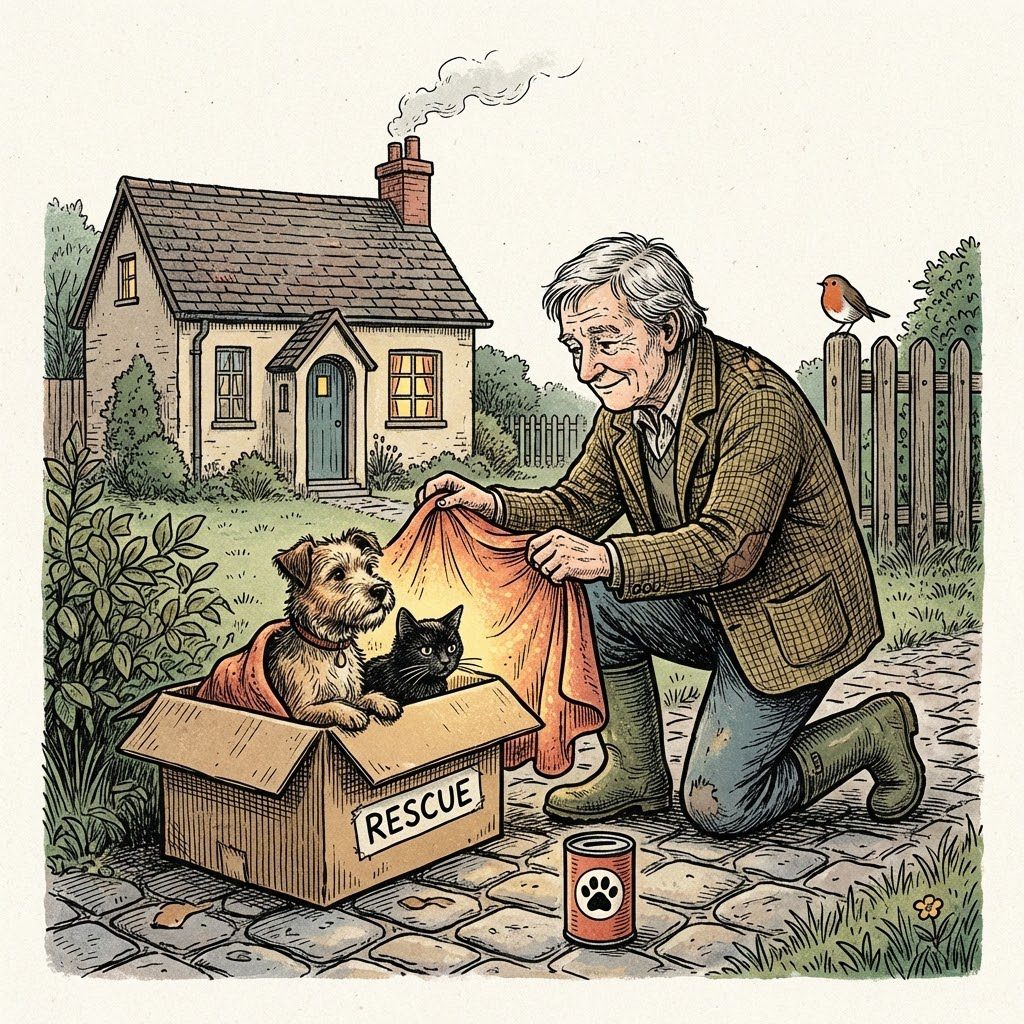
3.       Provide shelter.  This can be as simple as a cardboard box turned away from the elements.  If you have an old blanket, towel or sweater that could provide some warmth against the winter wind, the cat will appreciate it! 

4.       Call your local veterinary clinic and ask for the telephone number of the local Cat Protection League.  Ring them and let them know that you have a stray in your garden.  They will probably want to know how long it’s been there, and if you have any idea how old it is.

Stray cats can pull on the heartstrings, especially if they are young and it’s very possible that the one that you’re watching over will wriggle its way into your affection, but consider the consequences of having a cat before taking on responsibility for it – you need to make sure that you have the finances, and the time, to first make sure that it’s nourished correctly and is healthy after its time spent un-homed, then if it is a kitten it will need the necessary vaccinations plus it ought to be spayed if your veterinary discovers that this hasn’t been done.  If you have contacted the Cat Protection League prior to offering a home to the stray cat, they may be able to help with the financing of this procedure.

Although stray cats are a common sight all year around, it’s in the weeks following Christmas that those bought for as gifts find themselves suddenly homeless because of no fault of their own, and as these are usually less sturdy then more worldly outdoor cats, any help you can give them will help them survive to adulthood.


This post has been submitted by Simon Miller. Simon is the main contributor on Bored Tonight and has written many different press releases on the topic of sculptra clinic.

As the temperatures drop and the hours of darkness lengthen, cat owners who allow their feline friends to go outdoors need to be a little extra vigilant to ensure that their cat keeps healthy and safe throughout the winter.

The first thing that you cat needs is some kind of reflective collar.  Although you may not be keen on the bright luminous yellow, pink or orange offerings in the pet store, there can be no denying their effectiveness for showing where your cat is in a dark area.  If you are in a mainly residential area with a lot of cars coming and going, a cat can easily be lost amongst the darkness but a bright collar that reflects the headlights of the car helps a driver to see it.  If you’re in a mainly rural setting then perhaps you don’t need a full luminous collar but could put one of the more trendy ones that have reflective strips or motives around them.   It goes without saying that you should always have an ID tag of some description on your cat year round, but if you have changed the cat’s collar specifically for the dark nights, make sure you take the time to transfer the cat’s ID tag to the new collar also.

Temperatures are cold enough during the day, but overnight they’re often around freezing or lower.  If your cat usually goes out, and you don’t have a cat flap where he cat let himself back into the house when he’s had enough “fresh” air, try to encourage him not to go out at all later at night.  If he is out, see if you can train him to come back in (shaking food cans or packets is often a good way of doing this) before you go to bed.  This way you can be sure that no matter how low the temperatures drop, your cat is going to be safe and warm in the house.  If he doesn’t like the idea of being locked in at night, consider fitting a cat flap to one of your doors so that he can come inside if it gets too cold.  An older cat especially should be protected from being out too much in the cold weather as this could bring on health issues such as rheumatism from sitting on icy or damp places.

Cats are quite self sufficient and are not likely to go outside if they think it’s too cold, but by ensuring that they are well seen if they are out, and able to get back indoors when they choose, you are keeping them as safe as possible without the need to make them into indoors cats.


This entry has been submitted by Charlie Sawbridge. Charlie is also one of the primary writer for Smuge and has published many articles on pet insurance.

14.12.2007

The dark winter nights are here and so it’s time to think about keeping safe when out walking your dog.  At one time there was little you could do other than hope that the drivers were watching the road and would see you and your dog, but these days are a number of items that you can buy to ensure that you are seen and safe even in most badly lit of areas.

The first thing you can get is some kind of reflective collar for your dog; this will show up in the cars headlights.  You could get one that is completely reflective, or you don’t fancy that, you could buy one that has reflective parts to it.  An alternative to this would be to put a temporary reflector – such as one you’d attach to a child’s jacket to the dog when you’re taking him out.

The dog’s leash is another good thing to have reflected, although having it in some kind of luminous colour won’t just show a driver that there’s a dog nearby, it will also let you see where the dog leash is so that you don’t fall over it.  If you can’t find one of these to buy, or you use a retractable leash that isn’t night reflective, buy some luminous/reflective fabric paint that glows in the dark, and paint a line up the centre of the leash (keep it taut out of the hand grip until it dries).  Depending on how this works on your particular leash, you may have to apply this again during the winter as it may wear off with the leashes retracting mechanism making it scuff against itself, but it should work well for letting you see where the leash is especially if your dog’s managed to get himself a good 3-4 meters away from you!

Lastly, you also need to think about your own personal safety in the dark.  If you don’t want to wear a bright jacket, at least wear a reflective strip around your arm, or across the back of your jacket.  You may also find some things at a cyclist’s supply shop that you mightn’t be too reluctant to wear!  Remember that winter clothes are dark, and at night motorists may not see you (especially if they’re gossiping on a mobile phone, or to someone in the car) so wear something that will be picked up in their headlights and make sure both you and your dog can be seen in the dark.


This entry was submitted by Morgan Vessey, she regularly writes for Modern Cleo and Pretty Gritty. Morgan is fast becoming an online authority on dog insurance. Read her online journal here.